ARE KENYAN BUILDINGS SAFE? QUESTIONS RISE OVER CONSTRUCTION STANDARDS
By Gloria Chesang
A building is supposed to offer shelter, security and protection. Whether it is a family home, an office block or a commercial building, people enter these spaces trusting that the structures around them are safe.
But what happens when the very buildings meant to protect people become a threat to their lives?
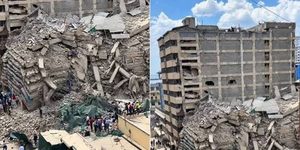
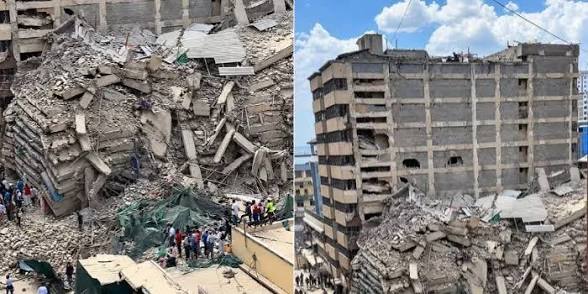
Recent building collapses in different parts of the country have brought this question back into public discussion. Incidents reported in areas such as Eastleigh, South C and Syokimau have raised concerns about the safety of buildings and the standards guiding construction in Kenya.
While each incident may have its own circumstances, the repeated cases have left many wondering whether enough is being done to prevent such tragedies.
Kenya has regulations governing the construction industry, including requirements on building approvals, structural designs, materials and professional supervision. Developers are expected to follow approved plans, while relevant authorities are responsible for ensuring that construction activities meet the required standards.
However, the existence of these regulations raises another important question: how effectively are they being enforced?
Are buildings inspected regularly during construction, or does attention only come after something goes wrong? How are developers who ignore approved construction plans held accountable? And what happens when a building is found to be unsafe?
These questions are particularly important in growing urban areas where construction continues to reshape neighbourhoods. As demand for housing and commercial spaces increases, the pressure to develop more buildings must not come at the expense of public safety.
For people looking for affordable housing, it is not always easy to establish whether a building has followed all the necessary construction requirements. Many tenants depend on landlords and regulatory authorities to ensure that the spaces they occupy are safe.
The situation also raises concerns for construction workers, who spend their days working on buildings that may still be under development. Their safety should be considered throughout the construction process, not only when a project is completed.
Building safety is not just the responsibility of developers. Architects, engineers, contractors, inspectors and government authorities all have roles to play. When any part of this system fails, the consequences can extend beyond the construction site and affect entire communities.
There is also a need for transparency whenever a building collapses. Investigations should establish what went wrong, whether construction requirements were ignored and whether anyone should be held responsible. The public deserves clear answers, especially when lives are lost.
The concern should not only be about buildings that have already collapsed. It should also be about structures that may have weaknesses but remain occupied, putting people at risk without their knowledge.
As Kenya continues to expand its towns and cities, the question of building safety cannot be ignored. Development should bring better living and working spaces, not uncertainty about whether the structures around people can withstand the test of time.
Perhaps the most important question is not how many buildings have collapsed, but whether enough is being done to ensure that the next one does not.
After all, a building should be a place of safety, not a reason for fear.