
coco for survival..
The Children Behind the Chocolate. Maxwell. 5/10\26..
For millions of people around the world, chocolate is a simple pleasure. It is enjoyed in birthday cakes, shared as a gift and sold in shops as one of the world’s favourite treats. But far away from supermarket shelves and chocolate factories, some children face a reality that is anything but sweet.
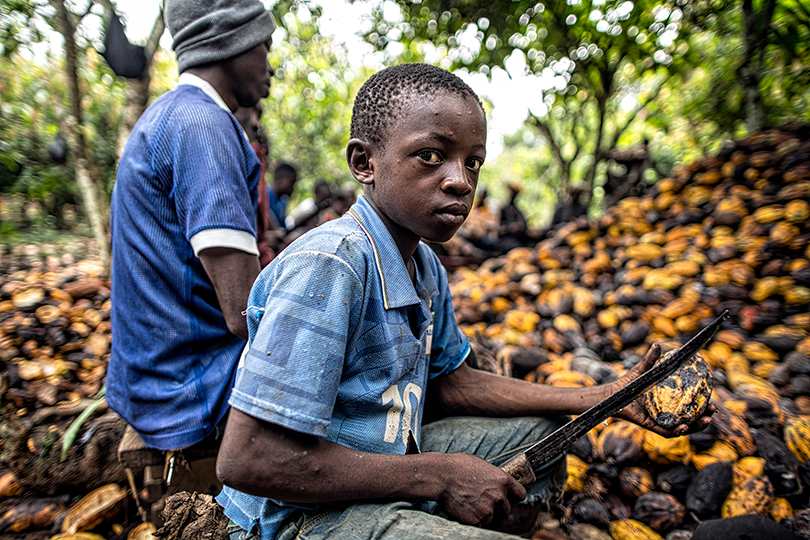
In cocoa-growing communities across West Africa, particularly in Ghana children are involved in farming activities under circumstances that can expose them to hazardous work. While some help their families age-appropriate tasks, others undertake demanding activities that may interfere with their education, threaten their health and deprive them of the childhood they deserve.in this place a child is a parent to their parent
The contrast is striking. Chocolate is associated with happiness, celebration and comfort, yet the production of its key ingredient can be connected to hardship for vulnerable farming families.
For a child working beneath the tropical sun, the day may begin long before classmates arrive at school. Farm duties can include carrying harvested cocoa pods, collecting beans and clearing vegetation. In more dangerous situations, children may be exposed to sharp tools, heavy loads and agricultural chemicals.
These are not merely farm activities. Depending on the child’s age, the conditions and the nature of the work, they can become serious threats to a child’s safety and development.
The persistence of child labour in cocoa farming cannot be understood without examining the economic pressures facing farming households. Many smallholder farmers depend on cocoa sales to pay for food, healthcare, clothing and education. When earnings are insufficient and adult labour is expensive or difficult to obtain, families may rely on their children’s help.
However, poverty does not make every form of child work acceptable. The challenge is to protect children while addressing the financial pressures that leave families with few alternatives.
For parents struggling to make ends meet, the decision to involve children in farm activities may be driven by necessity rather than a desire to deny them an education. Yet the consequences can be lasting when farm duties become too demanding or prevent children from attending school regularly.
Education offers children an opportunity to develop skills, pursue their ambitions and build a different future. But balancing school with demanding farm work can be difficult.
Long working hours may leave children exhausted, reduce the time available for homework or contribute to missed lessons. For those exposed to hazardous activities, the risks extend beyond the classroom to their physical well-being.
The consequences are not identical for every child. Some continue attending school while helping their families outside school hours; others may experience repeated absences or struggle to keep up with their studies. Understanding these differences is essential to telling the story accurately.
Behind the statistics are individual children with ambitions of becoming teachers, doctors, journalists, engineers and business owners. Their futures should not be determined by the economic circumstances into which they were born.
Cocoa travels through a complex supply chain involving farmers, cooperatives, traders, processors and chocolate manufacturers before reaching consumers. This complexity can make it difficult to identify the conditions under which cocoa was produced.
Governments, businesses and development organisations have introduced initiatives to identify child labour, improve farm monitoring and support farming communities. Yet the existence of programmes does not automatically mean that every child is protected.
Effective responses require more than removing children from hazardous work. Families need viable incomes, children need access to quality education, and farms need practical alternatives to relying on children’s labour. Companies must also take responsibility for identifying and addressing risks in their supply chains.
Consumers, too, have a role to play by asking questions about where cocoa comes from and what measures businesses take to protect children’s rights
The story of child labour in cocoa farming is ultimately about more than chocolate. It is about the choices available to families living in poverty, the value placed on children’s education and the responsibility of an industry that connects small farms to a global market.
A chocolate bar may take only seconds to unwrap and enjoy. The circumstances behind its ingredients, however, deserve closer attention.
Ending hazardous child labour will require sustained action from governments, farmers, companies and communities. It will also require recognising that children are not simply part of a workforce: they are young people entitled to safety, education, dignity and the opportunity to shape their own futures.
The question is no longer simply how chocolate reaches our hands. It is whether the industry can ensure that the children living at the beginning of its supply chain have the chance to build a future beyond the cocoa fields.